
Call For A Free Consultation
✅ Immediate Legal Advice
✅
Speeding Specialists
✅ Free Initial Case Review
Facing a speeding allegation? You could receive points or a disqualification. If you’ve been notified or given a court date, speak to a solicitor today.
Speeding Defence Solicitors for England & Wales
Quick Callback
We will get back to you as soon as possible.
Please try again later.
Specialist
Defence Lawyers.
Speeding is one of the most common motoring offences in the UK — and it can have serious consequences. Even a minor speeding case will usually result in penalty points and a fine. This can then lead to increased insurance costs. Higher-speed offences can lead to a driving disqualification. For many drivers, this will have a significant impact on their employment and daily lives.
At Verida Legal, we specialise exclusively in motoring law. We represent clients from first contact with the police through to court hearings and appeal work. We offer free initial advice and fixed-fee representation, so you know the cost from the outset.
A speeding offence means driving above the legal speed limit for the road you were on. In the UK, speed limits vary depending on the type of road and vehicle involved. While some speeding cases are straightforward, many cases turn on technical detail. As experienced speeding offence solicitors, we regularly advise clients where the issue is not simply the recorded speed but whether the allegation can be properly proved in law.
Speeding allegations often arise from fixed speed cameras, average speed camera systems, mobile enforcement vans, or police follow checks. The prosecution must prove that the speed limit was clearly indicated, that the vehicle was correctly identified, and that the speed detection equipment was accurate and properly operated. Failures in signage, procedure, identification, calibration or operation of the device can undermine the case.
If you receive a speeding ticket or a Notice of Intended Prosecution, you may be offered a fixed penalty (typically 3 points and a fine) or a speed awareness course. However, higher speeds or repeat offences can lead to a Single Justice Procedure Notice or a court summons. In more serious cases, the court can impose 6 penalty points or a driving disqualification.
Early legal advice from a specialist motoring offence solicitor can help you understand your options, protect your licence, and avoid mistakes when responding to police paperwork. If you have received documentation relating to a speeding offence, take advice before replying. Early action can materially affect the outcome.
Call us on
01942 364493 for free initial advice or use our contact form and we’ll call you back.

Charged with Speeding?
Contact Us
Call us on 01942 364493 or enter your details below:
Request A Callback
We will get back to you as soon as possible.
Please try again later.
How We Defend Speeding Allegations
Speeding prosecutions rely on strict technical and evidential requirements. The prosecution must prove the allegation beyond reasonable doubt. As specialist speeding offence solicitors, we scrutinise the evidence carefully to identify procedural errors, technical flaws, or weaknesses that may undermine the case.
We examine whether:
- The speed detection device was correctly calibrated and legally approved
- The device was operated properly by a trained officer in accordance with guidance
- The road signage was compliant, lawful, and clearly visible
- The Notice of Intended Prosecution was served correctly and within the statutory time limits
- The evidence reliably identifies the correct vehicle and driver
Failures in any of these areas can weaken the prosecution case. In some situations, this allows us to challenge the allegation directly. In others, it may place you in a stronger position to negotiate a reduced penalty.

Potential Defences
Every case is different and small details can make a big difference.
That is why it is crucial we review the evidence thoroughly.
Our solicitors examine all aspects of the case and identify possible defences.
Depending on the circumstances, we may look at:
Driver ID
The prosecution must prove that the correct vehicle was recorded and that you were the driver at the time of the alleged speeding offence. Blurred images, misread registrations, or cloned number plates can create doubt. If the evidence does not clearly identify you beyond reasonable doubt, the speeding charge may not be proved.
Speed Limit & Signage
We check whether the speed limit was properly signed and whether the restriction was clear at the location. If the limit wasn’t identifiable, you should have a defence.
Notice of Intended Prosecution
We review the Notice of Intended Prosecution (NIP) and any request to identify the driver, including whether key documents were served correctly and on time.
Speed Measurement
We scrutinise how the alleged speed was recorded, whether by fixed speed camera, average speed system, mobile enforcement unit, or police follow check. We examine whether the equipment was approved, calibrated, and operated correctly, and whether the resulting evidence can be relied upon in court.
Mitigation & Totting Up Risk
Where a defence is not available, our focus shifts to sentence mitigation. We prepare structured mitigation to achieve the minimum penalty possible. If a conviction would take you to 12 or more points, you will automatically face a six-month disqualification under totting-up rules. In these situations, we can represent you at a separate exceptional hardship hearing, arguing that a disqualification would cause disproportionate hardship to you or others.
See our dedicated
Exceptional Hardship
page
for more information.
Sentencing Guidelines for Speeding
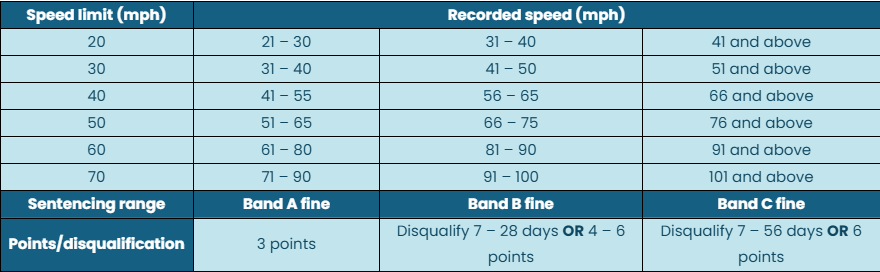
The outcome of a speeding offence depends mainly on how far above the limit you were and your existing driving record. The court applies the Sentencing Council speeding guidelines, which place offences into bands based on the excess speed. Higher bands attract more penalty points, larger fines (based on your weekly income), or a possible driving disqualification. You can refer to the speeding sentencing guidelines table below for the specific bandings.
New drivers (within 2 years of passing)
If you passed your driving test within the last two years, 6 points can trigger the revocation of your licence under the new driver provisions. You will have to reapply for a provisional licence and re-take your theory and practical tests, which can affect your work, insurance and day-to-day life.
If you’ve received a fixed penalty notice, Single Justice Procedure Notice, or a court date, we’ll explain your options clearly and help you protect your licence.
Accused Of Speeding?
Whether this is your first offence or you’re at risk of a totting up ban, we’ll guide you through the process and fight for the best possible outcome.
What to Do if You’ve Been Charged
If you’ve been stopped by the police or received police paperwork:
Do not ignore it —
you may be required to attend court.
Contact us immediately —
early legal advice can significantly influence the outcome.
Have your paperwork ready — we’ll review your charge sheet and any other paperwork you have received.
Our solicitors will explain the process and review your case in detail. We will provide clear, practical advice on your options.

Exclusive Focus on Motoring Law
Fixed Fees for Every Case Type
Free Initial Consultation with a Solicitor
Nationwide Representation