Failure To Provide A Specimen: A Complete Guide
Failure to Provide a Specimen: The Complete Guide to the Law and Possible Defences
Charged with failure to provide a specimen? Our specialist motoring solicitors explain the law, police investigations, possible defences and what happens next.
Introduction
Being arrested for failing to provide a specimen is often one of the most confusing experiences a motorist can face.
Many people assume that anyone charged with this offence must simply have refused to cooperate because they knew they were over the drink drive limit. In reality, the law is considerably more complex. While some motorists deliberately refuse to provide a specimen, others genuinely believe they tried their best, were physically unable to provide enough breath, or simply did not understand what was being asked of them.
At Verida Legal, our solicitors regularly advise motorists accused of failing to provide a specimen throughout England and Wales. One thing we have learned is that no two cases are ever the same. Every investigation turns on its own facts, and understanding what happened at each stage of the police investigation is often just as important as understanding the final allegation.
This guide explains:
- what the offence of failing to provide a specimen actually means;
- when the police can require a specimen;
- what happens after you are arrested;
- how the investigation is carried out;
- the role of the MG DD/A procedure;
- common misconceptions about the offence;
- when a "reasonable excuse" may arise; and
- why careful examination of the police procedure is often essential.
Our aim is not to suggest that every case has a defence or that every police investigation contains mistakes. Quite the opposite. Many investigations are conducted correctly and lead to lawful convictions.
However, Parliament has created a detailed statutory framework governing drink driving investigations. Those safeguards exist to protect both the integrity of the evidence and the rights of the individual. Where mandatory legal requirements have not been followed, that may have important consequences. Every case should therefore be considered on its own facts.
PART ONE: AN INTRODUCTION TO FAILURE TO PROVIDE A SPECIMEN FOR ANALYSIS
What Is the Offence of Failing to Provide a Specimen?
The offence is created by section 7(6) of the Road Traffic Act 1988.
In simple terms, the police may require a person to provide an evidential specimen of breath, blood or urine in certain circumstances. If a person fails to provide that specimen without a reasonable excuse, they may commit a criminal offence.
It is important to understand that this is not the same offence as drink or drug driving.
A person can be charged with failing to provide a specimen even where there is no evidential reading showing they were over the prescribed limit.
Likewise, the prosecution does not have to prove that someone was actually over the legal limit in order to secure a conviction for failing to provide. Instead, the prosecution must prove the elements of the section 7 offence.
For that reason, these cases often involve very different legal arguments from standard drink or drug driving prosecutions.

Why Does the Law Exist?
Some people ask why failing to provide a specimen is treated so seriously. The answer is relatively straightforward.
The criminal justice system depends upon reliable evidence. Parliament recognised that if drivers could simply refuse to provide evidential specimens whenever they suspected they might fail a breath test, drink driving legislation would become significantly more difficult to enforce.
The offence therefore encourages compliance with lawful requests for evidential specimens while recognising that there may sometimes be genuine reasons why somebody cannot provide one.
That is why the law refers specifically to a reasonable excuse.
Is Failing to Provide as Serious as Drink/Drug Driving?
Many motorists are surprised to discover that the penalties can be just as severe. A conviction may result in:
- a mandatory driving disqualification;
- an unlimited fine;
- a community order;
- imprisonment in the most serious cases.
The precise sentence will depend upon the circumstances of the individual case and the relevant sentencing guidelines. Because the consequences can be so significant, it is important that the investigation is carried out in accordance with the statutory procedure.

How Does a Failure to Provide Investigation Usually Begin?
Most investigations begin in exactly the same way as an ordinary drink driving allegation. A police officer may stop a vehicle because:
- they suspect the driver has consumed alcohol;
- the driver has committed a moving traffic offence;
- the vehicle has been involved in a collision; or
- there are other lawful grounds under the Road Traffic Act 1988.
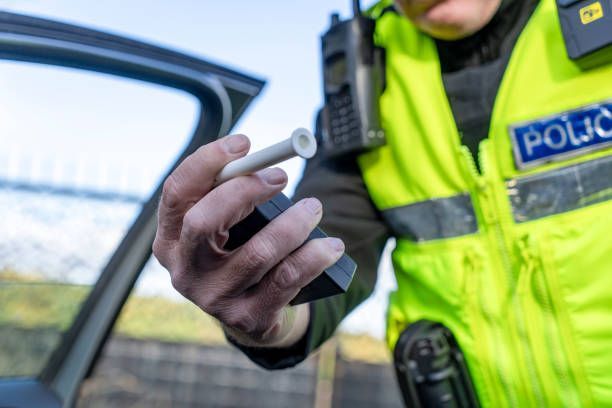
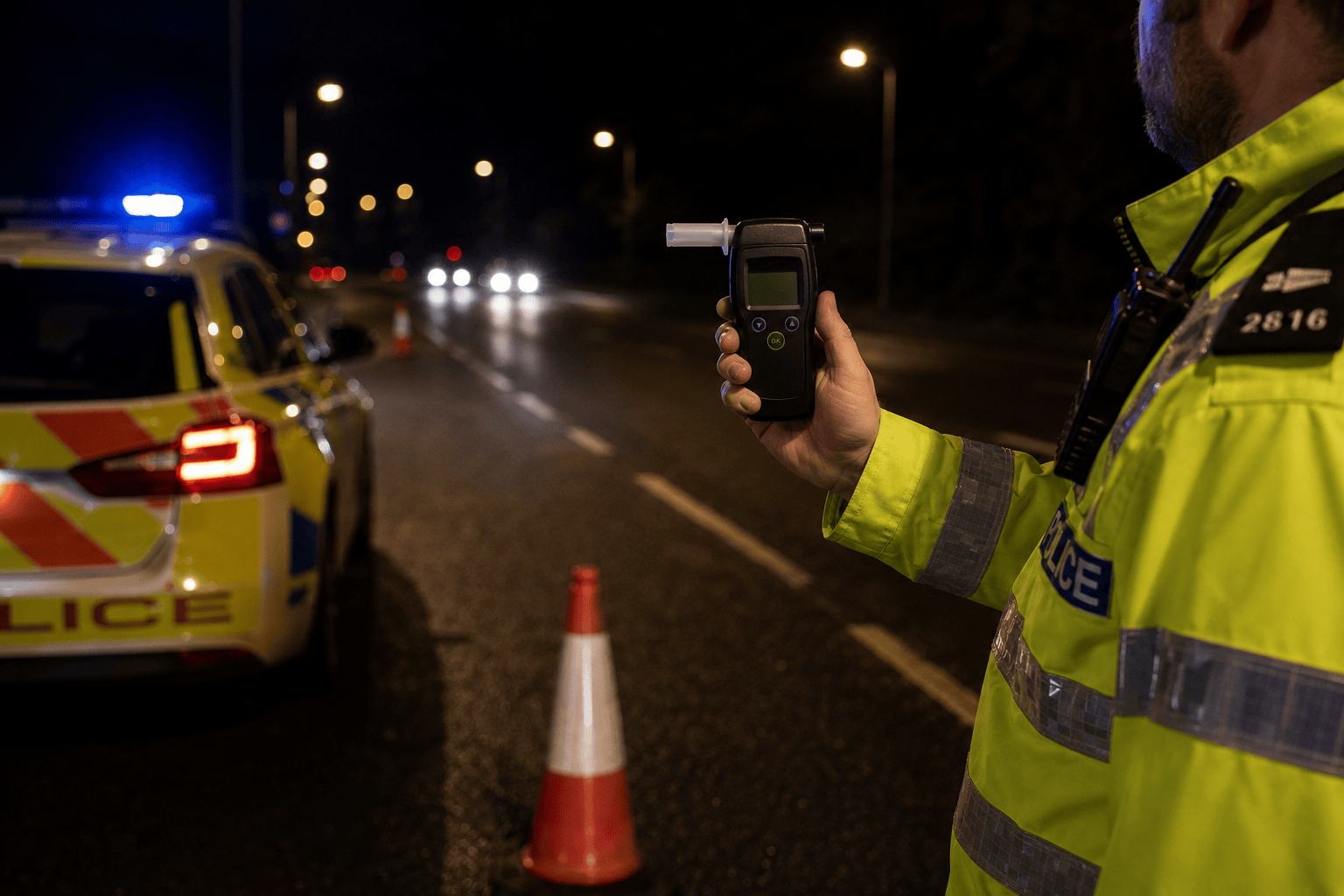
At the roadside, the officer may require a preliminary breath test using an approved roadside screening device.
It is worth remembering that this roadside breath test is not the evidential specimen relied upon in court.
Its purpose is simply to help the police decide whether further investigation is justified.
What Happens if the Roadside Test Is Positive?
If the roadside breath test indicates that alcohol may be present above the prescribed limit—or if the officer has other lawful grounds—the driver will usually be arrested. The arrest itself does not mean that the driver is guilty of any offence.
Instead, it allows the investigation to continue under controlled conditions at a police station, where evidential procedures can be carried out using approved equipment. Many people assume that everything important happens at the roadside.
In reality, the most significant parts of the investigation usually take place after the driver arrives at the police station.
Arrival at the Police Station
Upon arrival, the driver is booked into custody. A custody officer considers whether there are lawful grounds to authorise detention. Only once detention has been authorised will the evidential investigation normally continue. This stage is often overlooked, but it forms an important part of the overall investigative process.
The Evidential Room
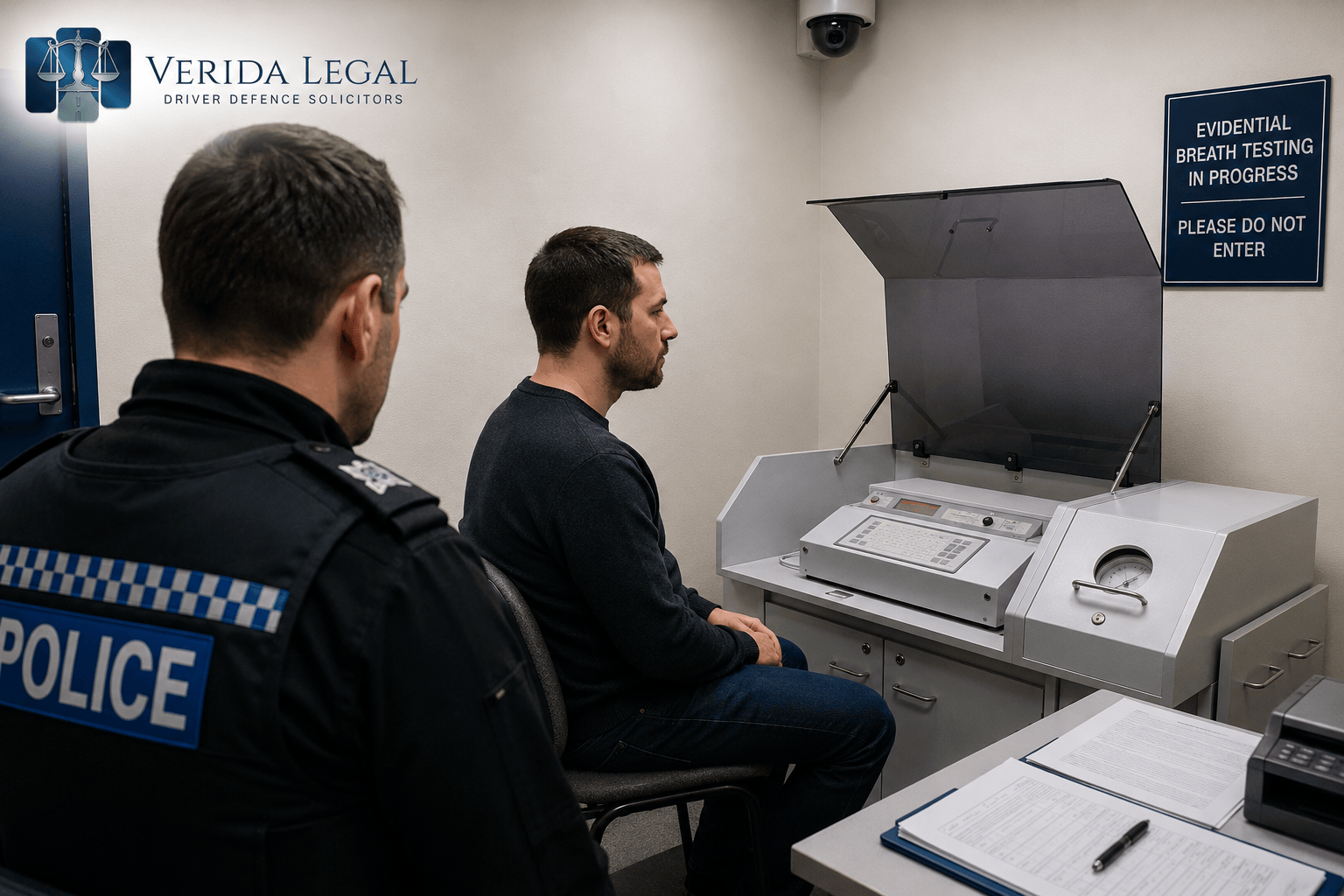
One of the most important locations in any drink or drug driving investigation is the evidential room.
This is where approved evidential breath testing equipment is located and where much of the formal investigation takes place. It is also where the healthcare professional is based if the police require a blood sample.
Contrary to what some people imagine from television dramas, the investigation is not simply a matter of asking somebody to blow into a machine.
Before evidential specimens are requested, officers are required to carry out a detailed procedural process designed to ensure that the investigation complies with the legal framework governing drink and drug driving investigations.
This process is commonly referred to by practitioners as the MGDD/A or MGDD/B procedure.
It is an important safeguard within the investigation and is far more detailed than many motorists appreciate.
Why Procedure Matters
One of the biggest misconceptions surrounding drink and drug driving investigations is that the evidential result is the only thing that matters. That is not correct.
The criminal courts are concerned not only with the result itself but also with how that evidence was obtained.
Parliament has created statutory safeguards governing the investigation. In addition, police officers follow detailed operational guidance designed to promote consistency, fairness and the reliability of the evidence.
These procedures are not unnecessary formalities. They exist because criminal convictions can have serious and long-lasting consequences. Where the required procedures are followed correctly, they help ensure that the evidence placed before the court is reliable. Equally, where mandatory statutory requirements have not been complied with, that may give rise to important legal issues which require careful consideration.
Not every procedural mistake will affect the outcome of a case. However, some can. Each case deserves careful scrutiny on its own facts.
What Happens Next?
Once the custody process has been completed and the investigation moves into the evidential room, the officer will begin the formal evidential procedure. This is where the investigation becomes significantly more detailed.
The officer must follow a structured process before requesting the evidential specimens that may later form the basis of a prosecution. Understanding that procedure is essential to understanding both the offence itself and the potential legal issues that may arise.
In the next section of this guide, we explain the MGDD procedure, the statutory warnings that must be considered, how evidential breath specimens are obtained, and why this stage of the investigation is often one of the most important in any failing to provide case.
PART TWO: INSIDE THE MGDD PROCEDURE
Once the custody process has been completed, the investigation usually moves into what is commonly referred to as the evidential room. For many motorists, this is the stage they remember most clearly. It is also the stage that frequently gives rise to questions once legal proceedings have begun.
Contrary to what many people expect, the officer does not simply ask a driver to provide specimens and then decide whether they will be charged. Instead, the evidential procedure is governed by both the statutory requirements of the Road Traffic Act 1988 and the police's Manual of Guidance for Drink and Drug Driving Enforcement. The paperwork used throughout this process is commonly referred to by practitioners as the MGDD/A procedure (for breath samples) or the MGDD/B procedure (for blood or urine samples). Although members of the public often think of it as "filling in a form", it is considerably more involved than that.
The Procedure Is Intended To Be Thorough
The MGDD procedure is designed to ensure that the investigation is carried out fairly, consistently and in accordance with the law. It is a structured process that requires officers to complete numerous stages before, during and after requesting evidential specimens.
Because of the importance of the evidence being obtained, this procedure should ordinarily be carried out within the evidential room, especially when asking for a sample of blood. It is not intended to be rushed. Nor is it intended to be carried out as little more than a checklist completed from memory.
The procedure exists to ensure that both the police and the motorist understand what is happening, what is being requested and what the legal consequences may be.
Why Is the Procedure So Detailed?
This offence can carry life-changing consequences. A conviction may result in:
- the loss of a driving licence;
- significant financial penalties;
- difficulties obtaining employment;
- increased insurance premiums; and
- in some cases, imprisonment.
You have a right not to self-incriminate. However, when the officer requires you to provide an evidential sample, that is exactly what you are being asked to do.
Given those consequences, Parliament has introduced a number of safeguards to ensure that evidential specimens are obtained lawfully. The police procedures complement those statutory safeguards by promoting consistency and reducing the risk of error.
While most officers are experienced in carrying out these investigations, the process remains detailed and requires careful attention throughout.
Can Police Officers Make Mistakes?
Like any professional carrying out a detailed procedural process, police officers are capable of making mistakes. That should not be regarded as criticism of individual officers.
Drink driving investigations often take place during busy shifts, at unsociable hours and under considerable pressure. The MGDD procedures themselves contains numerous stages which must be completed correctly. As a result, errors can and do occur from time to time. However, it is equally important not to assume that every mistake will undermine a prosecution.
Some procedural errors may have little or no impact upon the evidence. Others may require careful legal consideration. Where a failure relates to a mandatory statutory requirement, the position can be very different. For that reason, every investigation should be assessed individually rather than by applying broad assumptions.
The Importance of the Statutory Warning
One of the most significant safeguards within the investigation concerns the statutory warning that accompanies requests for evidential specimens.
The Road Traffic Act does not simply allow officers to demand a specimen without following the legal framework established by Parliament.
Section 7(7) of the act requires that an officer warns of the consequences of failing to provide the specimen. That warning serves an important purpose. It ensures that the individual understands:
- what is being required of them;
- the legal basis for that requirement; and
- the potential consequences of failing to comply.
These safeguards are not technicalities. They form part of the statutory process created by Parliament.
Where the required statutory warning has not been given, the prosecution case should fail.
Whether that affects a particular prosecution will always depend upon the individual circumstances of the case and should be considered by a solicitor experienced in criminal motoring law.
What Happens During Evidential Breath Testing?
If a drink driving investigation proceeds in the usual way, the officer will ask the motorist to provide evidential breath specimens using an approved evidential breath testing instrument. Unlike the roadside screening device, this equipment is specifically approved for evidential purposes.
The machine requires two separate breath specimens. If both specimens are successfully provided, the machine will analyse the alcohol concentration and produce the evidential reading relied upon by the prosecution.
Where the readings fall within the permitted tolerance, the lower reading is generally used for evidential purposes. This is another safeguard built into the system.
What Happens If Someone Cannot Provide a Specimen?
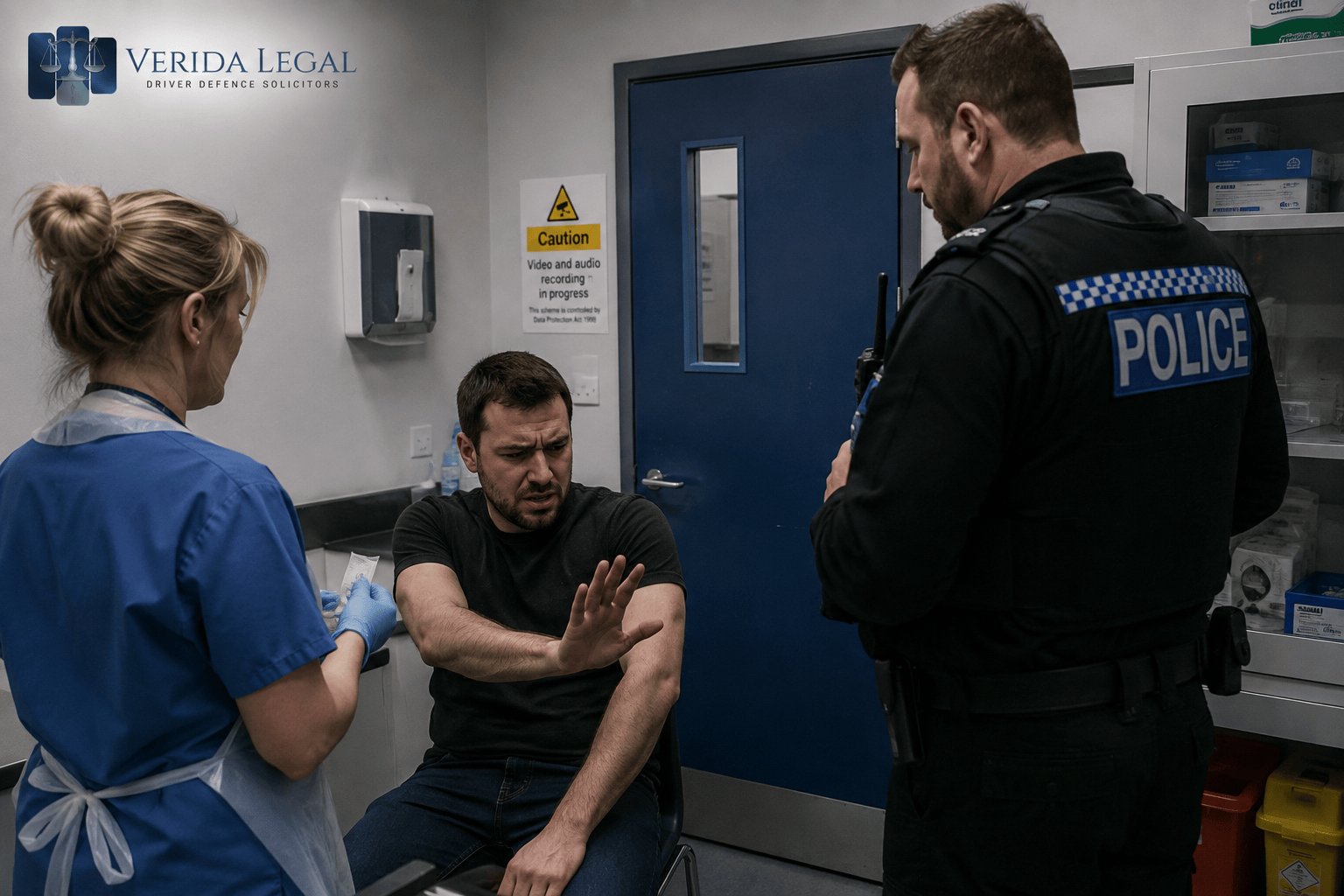
This is where many failing to provide cases begin. Not everyone who is unable to complete the breath procedure is deliberately refusing. Some motorists genuinely struggle to produce sufficient breath because of:
- respiratory conditions;
- reduced lung capacity;
- illness;
- injury;
- anxiety; or
- other physical or medical factors.
Others may begin to provide a specimen but repeatedly fail to produce enough breath for the machine to accept. The reasons why this occurs vary considerably from one individual to another.
The law recognises that genuine inability and deliberate refusal are not necessarily the same thing. Whether a particular explanation amounts to a reasonable excuse is a question that depends upon the evidence in the individual case.
We explore this in more detail later in this guide.
When Might Blood or Urine Be Required?
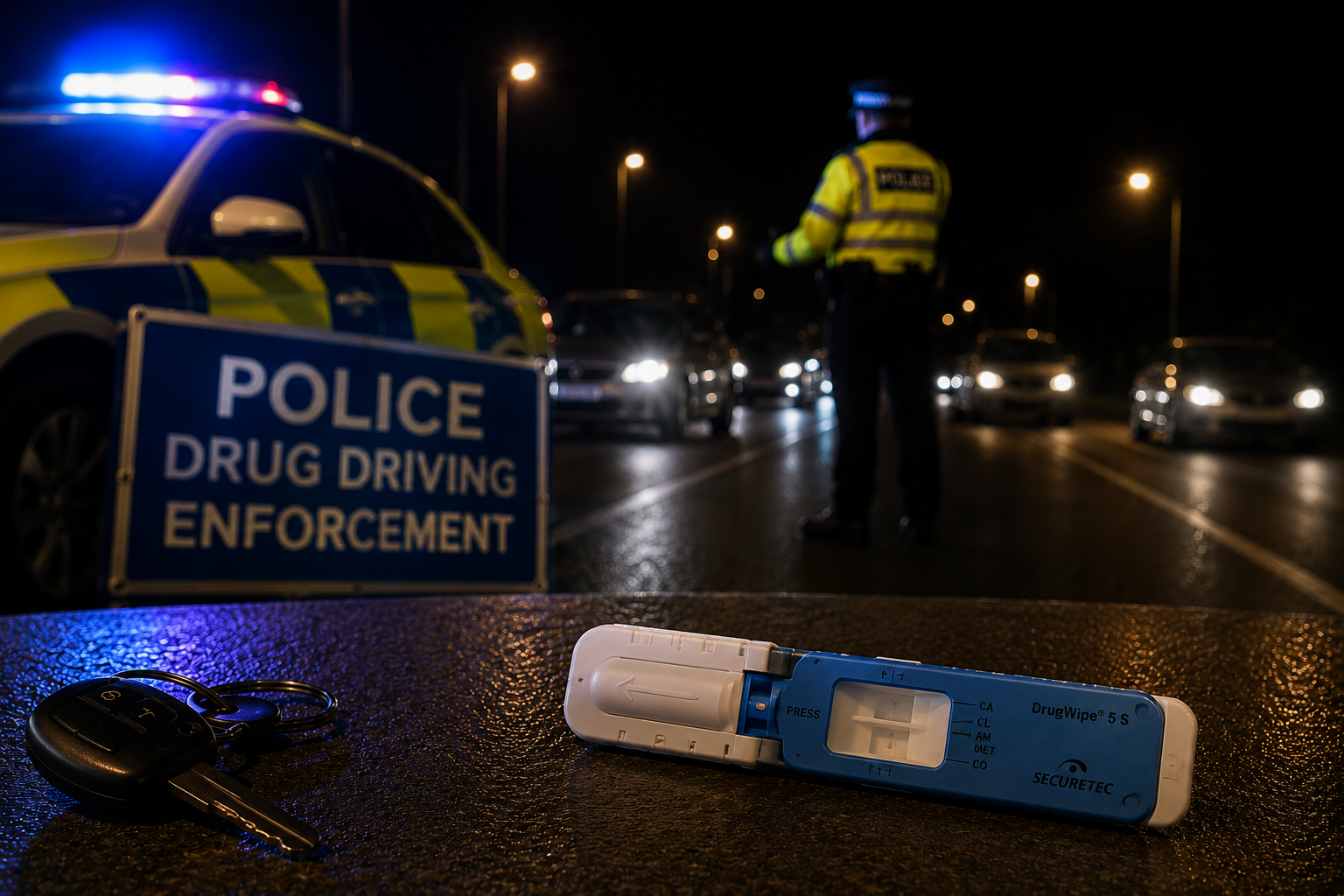
The first example would be where the police suspect a driver is over the legal limit for drugs. The police will almost always require a blood specimen first in this type of investigation.
In certain circumstances during a drink driving investigation, the legislation allows evidential blood or urine specimens to be obtained instead. The applicable procedure depends upon the circumstances of the investigation and the relevant statutory provisions.
These procedures are themselves subject to detailed legal requirements governing:
- how the specimen is requested;
- who may obtain it;
- how it is packaged;
- how it is stored; and
- how continuity of the evidence is maintained.
Each stage forms part of the evidential chain relied upon during any subsequent prosecution.
The Difference Between Procedure and Proof
It is important to distinguish between two separate questions.
The first is whether the prosecution can prove that a person failed to provide a specimen. The second is whether the investigation itself complied with the legal framework established by Parliament. Those questions are related, but they are not identical.
A positive breath reading or an allegation that someone failed to provide does not automatically answer every legal issue arising within the case. Equally, identifying a procedural irregularity does not automatically mean that a prosecution will fail.
Experienced motoring solicitors will usually examine the investigation as a whole. That includes considering:
- the legality of the initial stop;
- the grounds for arrest;
- compliance with statutory requirements;
- the MG DD/A procedure;
- evidential continuity;
- the documentation completed by the investigating officers; and
- any explanation provided by the motorist.
Only after considering all of those matters can informed advice be given about the strengths and weaknesses of the prosecution case.
Why Early Legal Advice Can Make a Difference
By the time a case reaches court, important evidence may already have been gathered and key decisions made. Obtaining specialist legal advice at an early stage allows the investigation to be reviewed while events remain relatively fresh. It also provides an opportunity to identify any issues that may require further enquiries or disclosure before the first hearing.
Many motorists understandably focus solely on whether they believe they were over the legal alcohol limit.
In reality, a specialist solicitor will often need to examine a much wider range of issues before advising on the prospects of the case.
In the next part of this guide, we examine one of the most important questions in failing to provide cases: what amounts to a "reasonable excuse", what common misconceptions exist about the offence, and how these cases are prepared for trial.
PART THREE: THE LEGAL PERSPECTIVE
Reasonable Excuse: When Failing to Provide May Not Be a Criminal Offence
One of the most important features of the offence of failing to provide a specimen is that not every failure automatically amounts to a criminal offence.
The legislation recognises that there may be circumstances in which a person is genuinely unable to comply with a lawful requirement to provide a specimen. That is why the offence is committed only where a person fails to provide a specimen without a reasonable excuse. Whether a reasonable excuse exists will always depend upon the particular facts of the case.
There is no single list of acceptable reasons, and every explanation must be considered on its own evidence.
Deliberate Refusal and Genuine Inability Are Not the Same Thing
It is easy to assume that everyone charged with failing to provide simply refused to cooperate. Our solicitors regularly find that the reality is often far more complicated. Some drivers may make it absolutely clear that they do not intend to provide a specimen. Others may repeatedly attempt to comply but struggle to produce sufficient breath despite their best efforts.
The distinction can be extremely important. A court will often consider questions such as:
- What exactly did the driver say?
- How many attempts were made?
- Did the officer believe genuine effort was being made?
- Were any medical issues raised?
- What was recorded on the custody record and MG DD/A documentation?
- Was the investigation completed in accordance with the statutory procedure?
The answers to these questions often provide valuable context when assessing whether an offence has been committed. It can also be very relevant if the court is deciding the sentence.
Medical Conditions
Medical conditions are frequently raised in failing to provide cases. Examples may include:
- asthma;
- chronic obstructive pulmonary disease (COPD);
- emphysema;
- recent chest infections;
- lung disease;
- recent surgery; or
- other conditions affecting breathing.
Simply having a medical condition does not automatically provide a defence. Likewise, the absence of a diagnosed medical condition does not necessarily mean that every failure to provide was deliberate.
The court will usually consider the medical evidence alongside the circumstances of the investigation as a whole.
In appropriate cases, medical records or expert evidence may assist in determining whether a person's explanation is supported by independent evidence.
Anxiety and Panic
Many people underestimate the effect that anxiety can have in a police custody environment. For somebody who has never previously been arrested, the experience can be overwhelming. Some motorists describe:
- panic attacks;
- hyperventilation;
- difficulty breathing;
- dizziness;
- or becoming increasingly distressed during repeated attempts to provide breath specimens.
Whether anxiety amounts to a reasonable excuse will depend upon the facts of the particular case. It is not enough simply to say that the experience was stressful. However, where anxiety has genuinely affected a person's ability to comply, it may become an issue requiring careful consideration.
"I Tried My Best"
One of the most common statements made by motorists is: "I tried my best, but the machine just wouldn't accept my breath."
That explanation should never simply be accepted or rejected without proper investigation. Instead, it is important to examine:
- how many attempts were made;
- whether the attempts were properly recorded;
- what observations were made by the officer;
- whether the machine accepted partial samples; and
- whether any medical concerns were raised.
In some circumstances, a failure to sustain breath might establish a reasonable excuse defence. In others, it may make a significant difference to the sentence. Thorough review of the evidence is crucial.
Common Misconceptions About Failing to Provide
Because the offence is not well understood by the public, a number of misconceptions have developed over the years.
Myth 1 – "Failing to provide is always worse than drink driving"
Not necessarily.
The penalties are undoubtedly serious. However, sentencing depends upon the individual circumstances of each case, the relevant guidelines and the powers available to the court.
Myth 2 – "If I keep trying, I can't be charged or convicted."
Repeated attempts do not automatically prevent a prosecution.
The court will consider whether the failure resulted from genuine inability or from a lack of cooperation.
Simply making several unsuccessful attempts does not answer that question on its own.
Myth 3 – "If I don't provide breath, the police have to offer me a blood test"
Not always.
Whether blood or urine becomes appropriate depends upon the circumstances. Only if the police believe you genuinely cannot provide breath will they consider a blood test.
Drivers should not assume that they are automatically entitled to choose an alternative specimen.
Myth 4 – "The police don't make mistakes."
Like any professional investigation, mistakes can occur.
However, it is equally wrong to assume that every investigation contains significant errors.
The correct approach is to review the evidence carefully before reaching any conclusions.
Do Police Investigations Always Follow the Correct Procedure?
The majority of officers seek to carry out investigations professionally and in accordance with their training.
Nevertheless, drink driving investigations involve detailed legal requirements and procedural safeguards. As with any complex investigative process, errors can occur.
Those issues might relate to:
- compliance with statutory requirements;
- the MG DD/A procedure;
- evidential documentation;
- continuity of evidence;
- or the recording of events during the investigation.
Whether any issue affects the prosecution will depend entirely upon the circumstances. Some irregularities may have no practical impact. Others may require careful legal analysis and lead to a defence.
It is important not to make assumptions either way.

Why Documentation Matters
A failing to provide case is often determined by much more than the recollection of the investigating officer. Important evidence may include:
- the custody record;
- MG DD/A documentation;
- body-worn video;
- custody CCTV;
- notebook entries;
- printouts from the evidential breath machine;
- healthcare records (where relevant); and
- witness statements.
When these documents are considered together, they often provide a detailed picture of how the investigation unfolded.
Reviewing that material carefully is an essential part of preparing any defence.
Preparing a Case for Court
If a driver is charged with failing to provide a specimen, the prosecution must prove the offence before the Magistrates' Court. A specialist solicitor will consider not only the prosecution evidence but also any evidence that may support the driver's account.
Every case is different.
Some cases turn primarily upon the statutory procedure. Others depend upon medical evidence.
Some involve disputes about what happened during the investigation. Others concern the legal interpretation of the facts.
There is rarely a single issue that determines every case.
Why Every Case Deserves Individual Consideration
One of the biggest mistakes motorists make is assuming that their case must have the same outcome as somebody else's. Drink and drug driving investigations are highly fact-specific.
A procedural issue that is decisive in one case may be entirely absent in another. Similarly, an explanation that amounts to a reasonable excuse in one set of circumstances may not do so in another.
For that reason, it is always sensible to obtain legal advice based upon the evidence in your own case rather than relying upon information found on internet forums or social media.
In the final part of this guide, we answer some of the most frequently asked questions about failing to provide a specimen, explain how Verida Legal assists clients facing these allegations, and summarise the key points every motorist should understand following an arrest.

Why Specialist Legal Advice Matters
Failure to provide a specimen cases are rarely straightforward. Unlike many road traffic offences, they often involve:
- substantial disclosure;
- expert reports;
- digital evidence;
- multiple witnesses;
- CCTV;
- bodyworn footage;
- detailed legal arguments.
Early legal advice allows that material to be reviewed carefully from the outset. Rather than focusing solely upon the allegation itself, our specialist solicitors will consider the evidence as a whole before advising upon the strengths and weaknesses of the prosecution case.
PART FOUR: CHARGED WITH FAILURE TO PROVIDE A SPECIMEN?
Frequently Asked Questions About Failing to Provide a Specimen
Every week, motorists across England and Wales are arrested on suspicion of drink driving and are asked to provide an evidential specimen. Many have never been through the criminal justice system before and understandably have numerous questions about what happens next. Below are some of the questions our solicitors are most frequently asked.
Does Failing to Provide Automatically Mean I Will Be Convicted?
No.
Like every criminal offence, the prosecution must prove the case before the court. A charge does not automatically result in a conviction. Every case should be considered on its own facts, including the evidence obtained by the police, compliance with the statutory procedure and any explanation provided by the defendant.
What Happens If I Really Could Not Provide Enough Breath?
The law recognises that there may be circumstances in which somebody is genuinely unable to provide a specimen. Whether that amounts to a reasonable excuse will depend upon the evidence.
The court may consider matters such as:
- any medical condition;
- what happened during the evidential procedure;
- the number of attempts made;
- the observations recorded by the investigating officer;
- any healthcare professional involved in the investigation; and
- any supporting medical evidence.
The outcome will depend upon the facts of the individual case rather than any single factor.
What If I Was Extremely Anxious?
Anxiety is something the courts may consider where it is genuinely relevant to the circumstances of the case. However, simply saying that you felt nervous will not automatically amount to a reasonable excuse.
If anxiety or another medical condition genuinely affected your ability to provide a specimen, it is important to discuss this with your solicitor at an early stage so that appropriate evidence can be obtained where necessary.
Can the Police Ask Me More Than Once?
Yes.
The precise procedure depends upon the circumstances of the investigation and the statutory framework that applies. The officer will usually follow the evidential procedure set out within the Manual of Guidance while complying with the legal requirements of the Road Traffic Act 1988. The fact that more than one request is made does not necessarily mean that anything unusual has occurred.
Can I Choose to Give Blood Instead of Breath?
Not necessarily.
Many motorists believe they can simply request a blood sample instead of providing breath.That is not how the legislation operates.Whether blood or urine becomes appropriate depends upon the circumstances and the statutory provisions that apply to the investigation. The decision is not simply a matter of personal preference.
Should I Plead Guilty Because I Could Not Provide a Specimen?
This is one of the most important decisions you will make. Before deciding how to plead, it is sensible to understand:
- the prosecution evidence;
- the police procedure;
- whether all statutory requirements were complied with;
- whether there may be a reasonable excuse; and
- what legal issues may arise in your particular case.
Obtaining specialist legal advice before entering a plea allows you to make an informed decision based upon the evidence rather than assumptions.
Why Is Specialist Legal Advice Important?
Drink and drug driving investigations are governed by detailed legislation and established police procedures.
Although the central allegation may appear straightforward, cases frequently involve issues concerning:
- the legality of the roadside stop;
- the grounds for arrest;
- evidential procedures;
- statutory requirements;
- the MG DD/A procedure;
- reasonable excuse;
- disclosure of evidence; and
- the interpretation of the available evidence.
An experienced motoring solicitor will examine the investigation as a whole rather than focusing solely upon the allegation itself.
How Verida Legal Can Help
At Verida Legal, our solicitors specialise exclusively in criminal motoring law.
We represent drivers throughout England and Wales facing serious motoring allegations, including:
- dangerous driving;
- careless driving;
- drink driving;
- drug driving;
- failing to provide a specimen;
- and other road traffic offences.
We understand that being accused of failing to provide a specimen can be overwhelming. Many clients come to us worried about losing their licence, their job or their reputation.
Our approach is to provide clear and realistic advice based upon the evidence. We carefully examine:
- the circumstances of the incident;
- the police investigation;
- witness evidence;
- expert reports;
- CCTV and dashcam footage;
- and the legal issues arising from the prosecution case.
Our role is not to make unrealistic promises.
Instead, we ensure that clients understand the evidence, the legal position and the options available to them.
Related Verida Legal Material
Dangerous driving charges can often be accompanied by other offences, such as drink or drug driving. You may also find the following pages helpful:
Recent Posts