Police Can Now Seize Your Vehicle Without a Warning: New Section 59 Rules Explained
Police Can Now Seize Your Vehicle Without a Warning: What the New Section 59 Rules Mean for Drivers
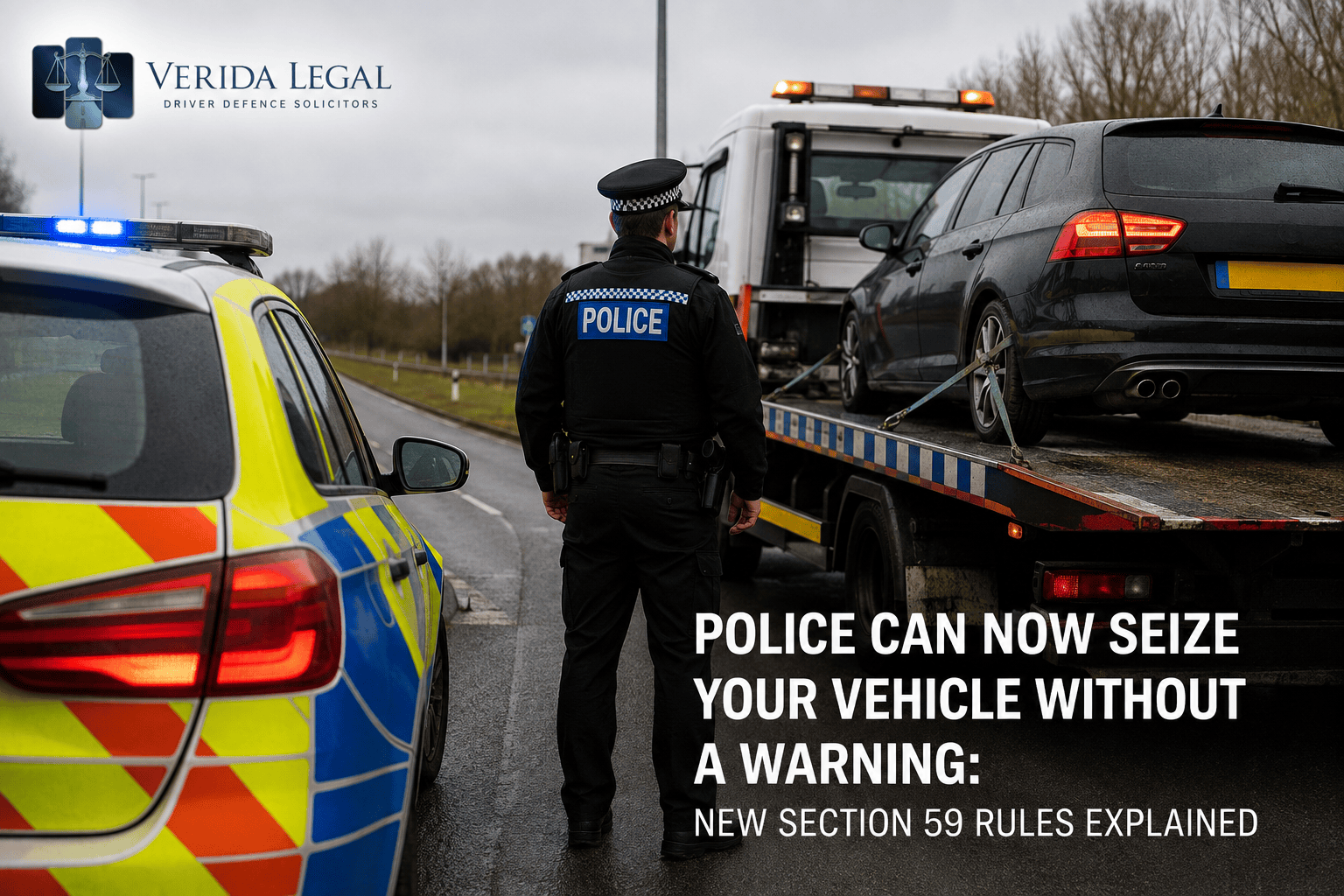
A significant change to police powers over vehicles has recently come into force in England and Wales.
Since 29 June 2026, police officers no longer have to give a warning before seizing a vehicle under Section 59 of the Police Reform Act 2002.
The change was introduced by the Crime and Policing Act 2026 and is intended to make it easier and quicker for the police to intervene where vehicles are being used in an anti-social manner. This is particularly relevant to motorists involved in allegations of careless or inconsiderate driving, car meets, car cruising, street racing, off-road driving and other forms of vehicle-related anti-social behaviour.
There has also been a further development which motorists should be aware of. Since 22 July 2026, the rules governing how long certain seized vehicles can be retained before disposal have also been shortened.
This means that, in some circumstances, a driver could now find themselves facing the immediate seizure of their vehicle, followed by a much shorter period in which they must take action to recover it.
At Verida Legal, we believe it is important that motorists understand what these powers actually mean, what they do not mean, and what options may be available if a vehicle is seized.
What Is Section 59?
Section 59 of the Police Reform Act 2002 gives the police powers to deal with certain vehicles being used in an anti-social manner. The power can apply where a constable in uniform has reasonable grounds for believing that a motor vehicle is being used, or has been used, in a manner which:
- contravenes Section 3 of the Road Traffic Act 1988, concerning careless or inconsiderate driving; or
- contravenes Section 34 of the Road Traffic Act 1988, concerning driving a motor vehicle off-road without lawful authority; and
- the use is causing, or is likely to cause, alarm, distress or annoyance to members of the public.
Where the statutory requirements are met, Section 59 gives the police powers to:
- order a moving vehicle to stop;
- seize and remove the vehicle;
- enter premises where they reasonably believe the vehicle to be, for the purpose of exercising the relevant powers; and
- use reasonable force where necessary.
Importantly, Section 59 is a police seizure power. It is not itself a criminal offence of "Section 59 driving". The fact that a vehicle has been seized under Section 59 does not necessarily mean that the driver has been convicted of an offence.
What Has Changed?
Historically, Section 59 contained an important safeguard.
Before a vehicle could generally be seized under the power, the police were required to warn the person appearing to be responsible for the relevant use of the vehicle that it would be seized if the behaviour continued or was repeated.
There were already exceptions to this requirement. For example, a warning did not have to be given where it was impracticable to do so or where a relevant warning had previously been given.
However, the general requirement to give a warning has now been removed.
The law changed on 29 June 2026. Section 8 of the Crime and Policing Act 2026 amended Section 59 of the Police Reform Act 2002 by removing subsections 59(4) and 59(5). The effect is straightforward: The police no longer have to give a Section 59 warning before seizing a vehicle.
The change was specifically designed to allow police to act more quickly when vehicles are being used in an anti-social manner. This is a significant change because a motorist can no longer assume that they will receive a warning before their vehicle is at risk of being seized.

Does This Mean the Police Can Seize Any Car Without Warning?
No.
This is an important distinction. The removal of the warning requirement does not give the police an unrestricted power to seize any vehicle they consider undesirable.
The other requirements of Section 59 remain relevant. A constable in uniform must have reasonable grounds for believing that the statutory circumstances exist.
The relevant conduct must involve the use of the vehicle in a manner falling within the legislation and causing, or likely to cause, alarm, distress or annoyance to members of the public.The police therefore still need to be able to rely upon the statutory requirements when exercising the power.
The change is essentially this:
Previously:
Relevant behaviour → warning → behaviour continues/repeats → vehicle can be seized.
Now:
Relevant behaviour → vehicle can potentially be seized immediately.
The removal of the warning requirement is therefore a change to how quickly the police can exercise the power, rather than the creation of an unlimited power to take vehicles whenever an officer chooses.
What Sort of Driving Could Result in a Section 59 Seizure?
Section 59 can potentially apply to a wide range of circumstances. The legislation specifically refers to careless or inconsiderate driving and certain forms of unauthorised off-road driving, together with conduct causing or likely to cause alarm, distress or annoyance. This could include circumstances involving:
Car meets and car cruising
Large gatherings of vehicles can sometimes result in complaints about:
- excessive noise;
- racing;
- anti-social driving; or
- large numbers of vehicles causing disruption to local residents.
The fact that a person has attended a car meet does not, by itself, mean that their vehicle can automatically be seized. The circumstances and manner in which the vehicle is being used remain important.
However, where the statutory requirements are satisfied, the absence of a prior warning means the police can now potentially act immediately.
Street racing and racing-style driving
Street racing and similar behaviour can present an obvious risk to other road users and members of the public. Depending upon the circumstances, driving of this nature may result in much more serious criminal allegations, including dangerous driving.
Section 59 provides an additional police power to remove a vehicle where the statutory requirements are met. It is therefore important not to assume that a driver will simply receive a warning or be allowed to drive away.
Aggressive or inconsiderate driving
Section 3 of the Road Traffic Act 1988 makes it an offence to drive a motor vehicle on a road without due care and attention or without reasonable consideration for other persons using the road.
Section 59 can be engaged where the relevant driving falls within this framework and also causes, or is likely to cause, alarm, distress or annoyance to members of the public.
This could potentially include behaviour such as aggressive manoeuvring, deliberate wheel spins or other forms of driving which go beyond ordinary poor driving and create an impact on members of the public. The precise circumstances will always matter.
Off-road driving
Section 59 can also apply where a vehicle is being driven off-road without lawful authority in circumstances covered by Section 34 of the Road Traffic Act 1988.
This can be particularly relevant to:
- off-road motorcycles;
- quad bikes;
- modified vehicles;
- vehicles being driven on land without permission; and
- other vehicles being used unlawfully away from roads.
Again, the Section 59 test is not simply whether a vehicle is off-road. The statutory requirements must be satisfied.
What Happens When the Police Seize a Vehicle?
If the police exercise their Section 59 powers, the vehicle can be seized and removed. The vehicle will generally be taken to a recovery or storage facility. The owner will then need to take steps to recover it. This can involve:
- identifying where the vehicle has been taken;
- establishing what documentation is required;
- proving ownership or entitlement to possession;
- paying the relevant recovery and storage charges; and
- complying with the applicable release requirements.
The process is therefore not simply a matter of waiting for the police to return the vehicle.
How Much Does It Cost to Recover a Seized Vehicle?
Vehicle recovery charges are prescribed by legislation and depend upon factors including the type, size, position and condition of the vehicle. For example, under the current statutory charges, the removal charge for a standard car up to 3.5 tonnes which is upright, on a road and not substantially damaged is £192.
The current storage charge for a vehicle of this type is £26 for each period of 24 hours or part thereof. Different charges apply to motorcycles, larger vehicles and vehicles which are substantially damaged or recovered from off-road locations.
There can also be a disposal charge where the vehicle is not recovered. This means that delays in dealing with a seizure can become expensive.
The Government has also been reviewing the level of vehicle recovery fees, with further changes to charges being considered separately.

A Further Change: Vehicles Can Now Be Disposed of More Quickly
The removal of the Section 59 warning is not the only recent change affecting seized vehicles. The Removal, Storage and Disposal of Motor Vehicles Timeframes (Amendment) Regulations 2026 came into force on 22 July 2026. These regulations changed the timeframes applying to vehicles seized under several different police powers, including Section 59.
For Section 59 vehicles, the previous 14-day period before disposal has been reduced to seven days, and references to "working days" have been replaced with "days" in the relevant provisions. The changes are intended to allow vehicles to be disposed of more quickly and to reduce the amount of time vehicles remain in police or recovery compounds.
This makes it particularly important for anyone whose vehicle has been seized to deal with the seizure promptly.
Why Is the Seven-Day Rule Important?
Imagine that your car is seized on a Friday.
Under the new arrangements, you cannot simply assume that you have several weeks to decide what to do. The relevant deadlines can now run in calendar days, rather than working days. This means weekends and other non-working days can be relevant to the calculation.
If you receive a seizure notice, you should therefore read it carefully and establish:
- when the vehicle was seized;
- when the notice was issued;
- where the vehicle is being stored;
- what you need to do to reclaim it;
- what charges must be paid;
- what documents you need to provide; and
- what deadline applies.
Failing to act quickly could result in the vehicle being disposed of.
Can the Police Keep or Sell My Car?
Potentially, yes.
Section 59 gives the police the power to seize and remove a vehicle, while the associated regulations govern its retention, release and disposal. If the relevant requirements for disposal are met and the vehicle is not reclaimed within the applicable timeframe, the vehicle may ultimately be disposed of. This is one of the reasons the recent changes are so significant.
The consequences of a Section 59 seizure can therefore extend considerably beyond simply being unable to use your car for a few days. A vehicle may be:
- valuable;
- essential for work;
- used by family members;
- subject to finance;
- a modified or specialist vehicle; or
- particularly difficult or expensive to replace.
The financial consequences of losing the vehicle can therefore be substantial.
What If the Vehicle Belongs to Someone Else?
This is an important issue. The person driving the vehicle and the person who owns it may not be the same person. For example:
- a parent may own a vehicle driven by their child;
- an employer may own a vehicle driven by an employee;
- a finance company may have an interest in the vehicle;
- a vehicle may have been borrowed from a friend; or
- the vehicle may have been stolen.
The fact that someone else owns the vehicle does not necessarily prevent the police from exercising the seizure power. However, the ownership position can become important when dealing with the recovery and release of the vehicle.
The Government has specifically recognised concerns about innocent owners whose vehicles may have been used by someone else.
If you are the owner of a vehicle which has been seized but you were not the person driving it, it is particularly important to establish your position quickly.
What If My Vehicle Was Stolen?
A particularly difficult situation can arise where a vehicle has been stolen and subsequently used in an anti-social manner. The fact that a vehicle was used in circumstances falling within Section 59 does not necessarily mean that its owner was responsible for the behaviour.
The Government has acknowledged that there can be circumstances in which innocent owners are affected by vehicle seizure powers, including where vehicles have been stolen. If your vehicle has been stolen and is subsequently recovered after being used in circumstances which might engage Section 59, you should make the position clear to the police and ensure that you understand the procedure for recovering the vehicle.
You should also keep evidence demonstrating that the vehicle was stolen and that you were not responsible for its use.

Does a Section 59 Seizure Mean I Will Be Prosecuted?
Not necessarily.
This is an important point. Section 59 is a police power to seize and remove a vehicle. It does not require the police to obtain a conviction before exercising the power.
The Government has expressly explained that the seizure power does not depend upon prosecution for, or proof of, the underlying behaviour. The statutory test instead concerns the reasonable grounds of the constable. This means that:
A Section 59 seizure and a criminal prosecution are not the same thing.
You could therefore have your vehicle seized without ultimately being convicted of a motoring offence. However, if the police believe that a criminal offence has also been committed, you could face separate proceedings. For example, depending upon the evidence, allegations could include:
- careless driving;
- dangerous driving;
- driving otherwise than in accordance with a licence;
- driving without insurance;
- offences involving vehicle registration;
- or other criminal offences arising from the circumstances.
The fact that a Section 59 power has been used does not prevent the police from investigating or prosecuting other offences where appropriate.
Can I Challenge a Section 59 Seizure?
If you believe your vehicle has been seized unlawfully or that the statutory requirements were not satisfied, there may be grounds to challenge the decision. This will depend heavily upon the circumstances. Important questions can include: What did the police actually observe?
The precise behaviour leading to the seizure can be crucial.
Was the vehicle actually being driven in the manner alleged?
Was there evidence of careless or inconsiderate driving?
Was the vehicle being driven off-road?
What did the officer see?
Was there a sufficient connection with alarm, distress or annoyance?
Section 59 requires more than simply a disagreement between a driver and a police officer. The statutory test refers specifically to conduct causing, or likely to cause, alarm, distress or annoyance to members of the public. The circumstances need to be considered carefully.
Did the officer have reasonable grounds?
The legislation requires the constable to have reasonable grounds for the relevant belief. This is therefore another important aspect of any challenge. It may be necessary to examine:
- body-worn video;
- dashcam footage;
- CCTV;
- photographs;
- statements;
- police notebook entries;
- radio communications; and
- other evidence surrounding the incident.
If you believe there are grounds to challenge the seizure of the vehicle, a solicitor may make representations to the police in writing.

Does the Police Officer Have to Be in Uniform?
Yes. Section 59 specifically refers to a constable in uniform.
This is an important statutory requirement and should not be overlooked when considering the circumstances of a particular seizure. As with any legal power, the precise wording of the legislation matters.
What Is the Difference Between Section 59 and Other Vehicle Seizure Powers?
Section 59 is not the only power allowing the police to seize vehicles. There are other statutory powers covering different circumstances. For example, Section 165A of the Road Traffic Act 1988 provides police with powers relating to vehicles being driven by someone without the appropriate licence or insurance.
There are also separate powers dealing with matters such as:
- unlawfully parked vehicles;
- abandoned vehicles;
- vehicles involved in unlawful trespass; and
- other circumstances prescribed by legislation.
It is therefore important to establish which power the police are actually relying upon. The fact that a vehicle has been seized does not, by itself, tell you why it was seized or which legal procedure applies.
What Does This Mean for Car Meets?
The changes are likely to be particularly relevant to organised and informal car meets. There is nothing inherently unlawful about meeting other motorists or attending a car event. However, the way vehicles are used at such events can potentially lead to police intervention.
Activities such as:
- racing;
- drifting;
- wheel spinning;
- aggressive acceleration;
- dangerous manoeuvres;
- excessive noise;
- blocking roads;
- driving aggressively around pedestrians; or
- other conduct creating alarm, distress or annoyance can create legal problems.
The removal of the warning requirement means that motorists attending such events should not assume that the police must first give them an opportunity to stop the behaviour before seizing their vehicle.
What Does This Mean for Young Drivers?
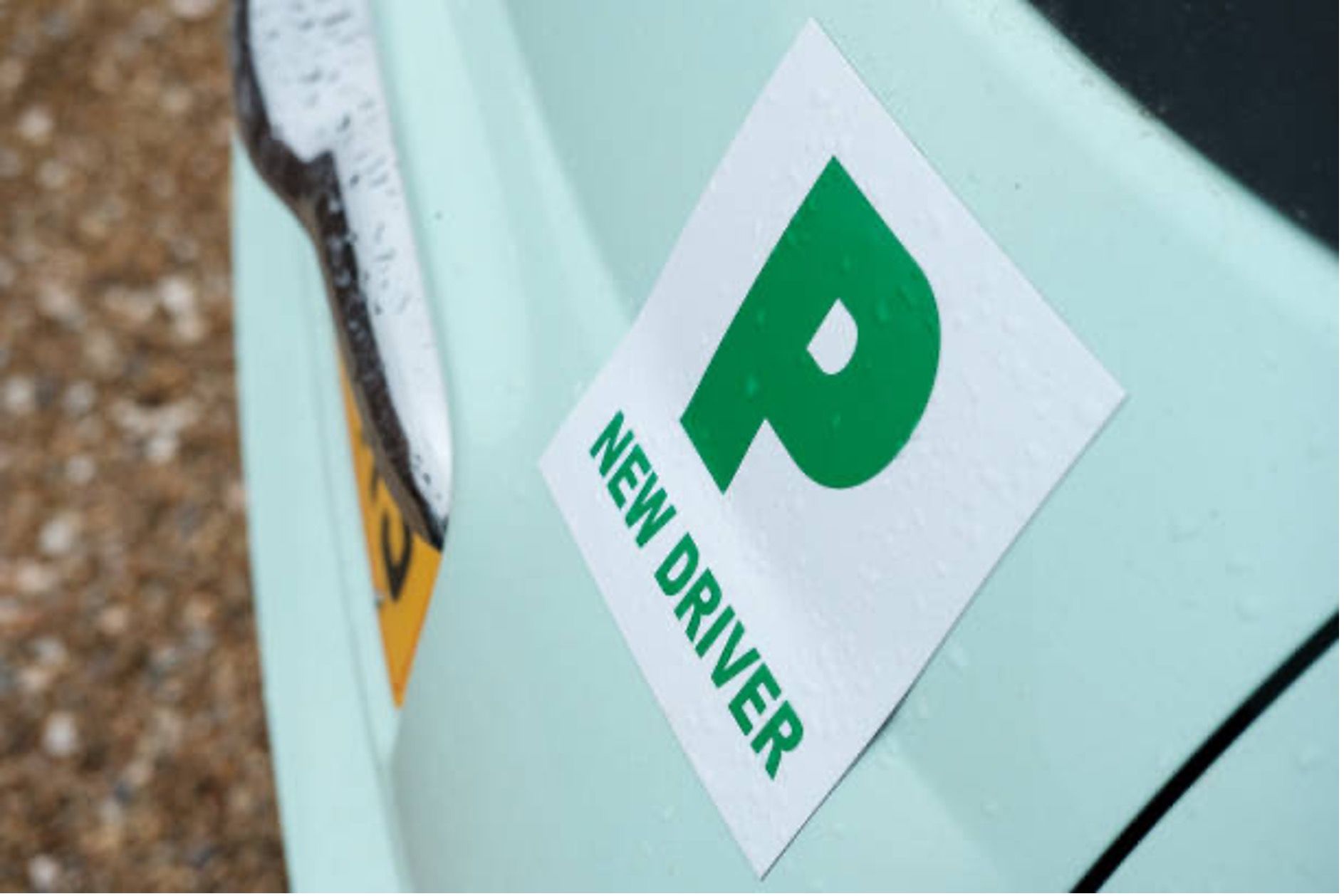
Young drivers can be particularly vulnerable to the consequences of vehicle seizure. A vehicle may belong to a parent or another family member, while the young person is the driver.The seizure of the vehicle can therefore have consequences for the entire household.
A young driver could also potentially face separate allegations relating to:
- careless driving;
- dangerous driving;
- insurance;
- licence conditions; or
- other offences.
Parents and vehicle owners should therefore understand that allowing another person to use their vehicle does not necessarily mean they will be unaffected if the vehicle is subsequently seized.
Could a Section 59 Seizure Affect My Driving Licence?
A Section 59 seizure is not, by itself, a driving conviction and does not automatically result in penalty points or a driving disqualification. However, the underlying circumstances may result in separate criminal proceedings. For example, if the police allege that the driver was driving carelessly or dangerously, the driver could potentially face a prosecution for that offence.
Any resulting conviction could have consequences for the driver's licence. This is another reason why it is important to distinguish between the seizure of the vehicle and any criminal prosecution arising from the alleged driving.
They are related, but they are not necessarily the same thing.
What Should You Do If Your Vehicle Has Been Seized?
If your vehicle has been seized under Section 59, you should act promptly.
1. Find out exactly why the vehicle was seized
Ask for and carefully read the relevant seizure documentation. You should establish which statutory power the police are relying upon.
2. Find out where the vehicle is being kept
You need to know the location of the recovery or storage facility and any relevant opening times.
3. Establish the deadline
Do not assume you have several weeks to deal with the matter. Following the recent changes, the relevant disposal periods can be significantly shorter than previously.
4. Establish what you need to reclaim the vehicle
This may include:
- proof of identity;
- proof of ownership or entitlement to the vehicle;
- driving licence documentation;
- insurance documentation; and
- payment of recovery and storage charges.
The exact requirements can vary according to the circumstances and the applicable seizure regime.
5. Preserve evidence
If you believe the vehicle should not have been seized, preserve evidence immediately. Dashcam footage and CCTV should not be left until weeks later.
6. Obtain legal advice where appropriate
If the seizure is connected with allegations of a motoring offence (e.g. drink driving, drug driving, careless or dangerous driving), specialist legal advice can be particularly important.
How Can Verida Legal Help?
At Verida Legal, we specialise in criminal motoring law and represent motorists facing a wide range of driving allegations throughout England and Wales.
If your vehicle has been seized under Section 59 and you are facing allegations arising from the circumstances surrounding the seizure, we can help you understand your position.
We can consider:
- why the vehicle was seized;
- whether you are facing a separate criminal prosecution;
- what steps need to be taken in relation to the vehicle; and
- how best to approach any subsequent criminal proceedings.
Where a vehicle is at risk of disposal, time is particularly important.
If you believe the police have seized your vehicle incorrectly, or you have been told that your vehicle has been seized under Section 59, obtaining advice early is crucial.

Call For A Free Consultation
✅ Drink Driving
✅ Drug Driving
✅ Dangerous Driving
✅ Speeding
✅
No Insurance
✅ Using A Mobile
If you are facing any driving offence, please get in touch. Our solicitors are always happy to provide you with free initial advice.
Driver Defence Solicitors for England & Wales
Quick Callback
We will get back to you as soon as possible.
Please try again later.
Further Reading
If you want more information about motoring offences, take a look at some of our other pages:
Our Dedicated Drink Driving Page: Click Here
Our Dedicated Drug Driving Page: Click Here
Blog: Can I Avoid A Drink Driving Ban In The UK?
Blog: Being Released Under Investigation: What You Need To Know
Recent Posts